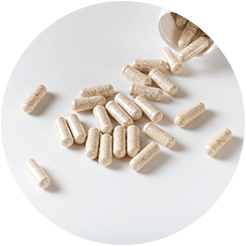


L-Glutamine

About L-Glutamine

Glutamine is nutritionally classified as a nonessential amino acid. It is also considered a conditionally essential amino acid, since its requirement increases significantly in conditions of accelerated catabolism—such as metabolic stress—so that its demand cannot be met by in vivo synthesis alone.

Uses/Benefits

Glutamine is a protein-building amino acid that is important for maintaining muscle as well as supporting immune and intestinal health. Maintenance of lean muscle is important to athletes and active individuals. A common problem during strenuous activity is the loss of lean muscle, or wasting, as muscle tends to break down after strenuous activity. This negatively impacts performance and recovery.

Glutamine is highly utilized by the cells of the immune system. It is necessary for the production of proteins secreted by the immune system in response to foreign organisms. Glutamine also supports the normal functioning and health of intestinal cells. It is essential for the optimal health of the intestinal lining, which maintains the integrity of the gut mucosal tissue.

Manufacturing

L-glutamine is manufactured by fermentation from carbohydrate sources. L-glutamine from Ajinomoto is manufactured under cGMP conditions. No ingredients of animal origin are used in the manufacturing process. A Drug Master File for L-glutamine from Ajinomoto is on record at the FDA. L-glutamine meets USP standards.

Glutamine

Abbreviation: L-Gln
CAS Number: 56-85-9
Conforms To: USP, DAB
Chemical Name: (S)-2-Aminoglutaramic Acid
Chemical Formula: C5H10N2O3
Molecular Weight: 146.1400
Nitrogen Content: 0.1917
Assay: 99.0 to 101.0%
Solubility: Soluble in water
Description: White crystals or crystalline powder; slightly characteristic taste


Action bulkAction small